A heartbreaking fact about Indonesia’s fishing industry is that a large amount of fish caught by local fishermen never reaches our plates. Up to 40% of fish catches are wasted due to poor management, causing Indonesia to lose up to Rp 104 trillion per year. What is the cause?
Fish, as a perishable food commodity, often loses quality due to inadequate harvesting, storage, and distribution processes. Fishermen often discard part of their catch to make room for higher-value fish, and while still on board, the remaining fish are frequently soaked for too long. Upon arrival, many fish are still unloaded at uncovered docks. All these factors force many fish to be discarded due to poor quality. Overall, poor fishing practices account for 8.2% of total seafood waste in Indonesia, followed by weaknesses in transportation and storage at 6%, lack of processing and packaging standards at 9%, and distribution network issues at 15%.
The problem of wasted marine products becomes even more complex when considering the socioeconomic conditions of coastal communities. As the main producers of local fish, each family still depends on the uncertain income of the husband as a fisherman. This dependence on a single source of income makes fishing families economically vulnerable, especially when catches drop or market prices fall.
Recognizing the urgency of this dual problem, PT Mataram Paint (EMCO) took the initiative to empower women in coastal areas through a Corporate Social Responsibility (CSR) program focused on training in seafood processing. This program is expected to provide an alternative source of additional income for fishing families, while optimizing the utilization of fish that has been wasted when not immediately sold fresh. Through intensive training, participants are taught techniques for processing marine products into high-value goods, so that fish don’t have to be sold only in their fresh form, but can also be processed into value-added products, creating new opportunities to improve the economic well-being of families.
Marine Product Processing Training Program
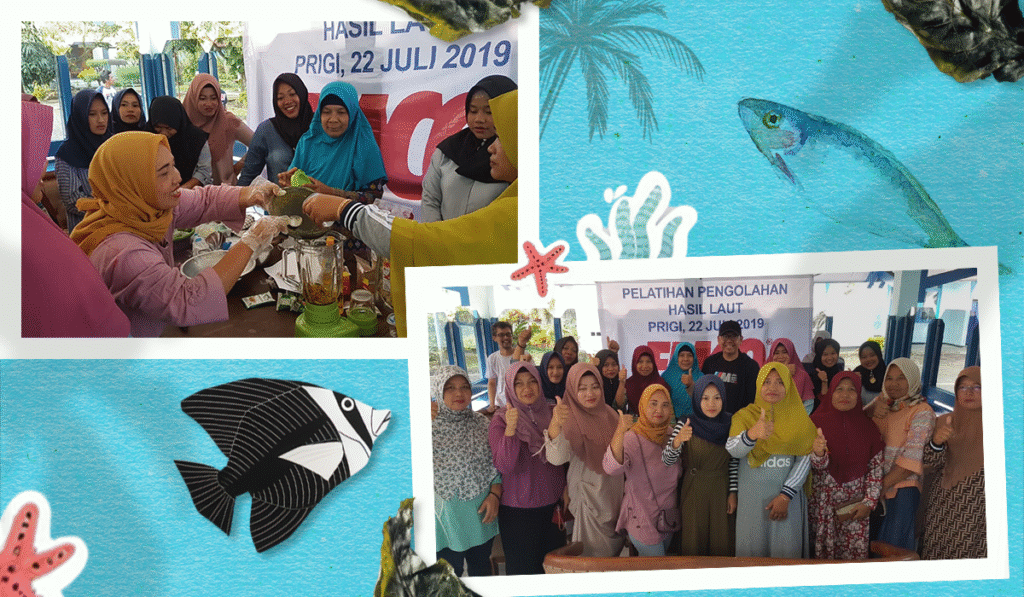
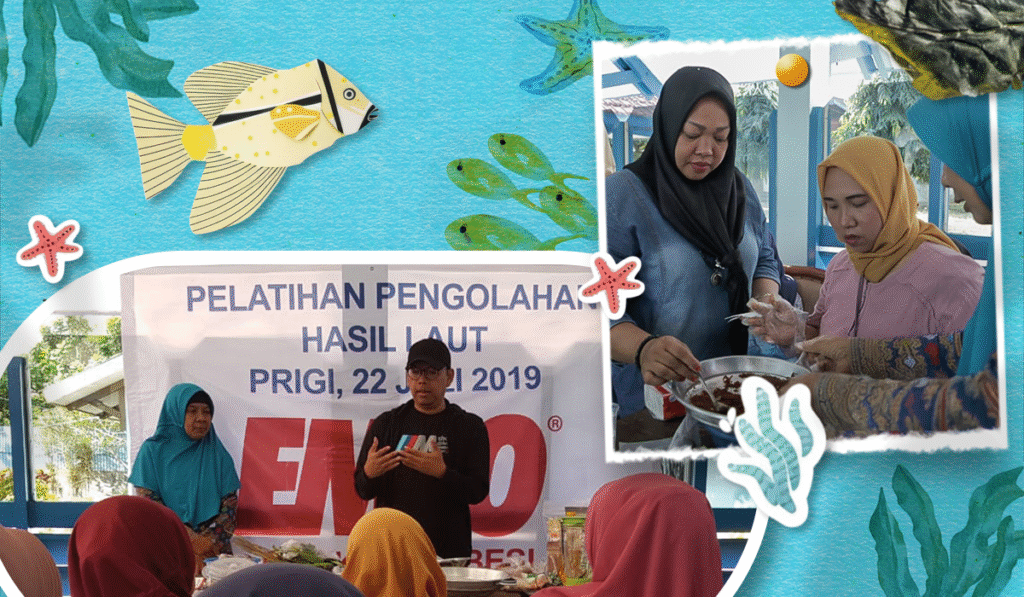
PT Mataram Paint initiated a seafood processing training program as a form of community outreach for coastal communities in the Prigi area of Trenggalek Regency on July 22, 2019. The training, which involved 20 housewives from fishing families, focused on making seafood chips with the aim of developing it into a small or medium-sized enterprise (SME). Participants were taught basic processing techniques, including selecting high-quality raw materials, hygienic processing methods, and attractive packaging techniques through hands-on practice.
EMCO’s CSR program demonstrates its commitment to community empowerment by providing full support in the form of experienced experts. Although it has not yet received direct support from the local government, EMCO is collaborating with Kolam Ikan Creative Communication to facilitate all training needs, including providing professional instructor Ibu Irayati. This inspiring instructor from Madura is a successful MSME entrepreneur with leading products such as Rengginang Kepiting and Terasi Bubuk, providing direct motivation for participants to apply the knowledge they have gained in starting small businesses.
Impact of Training Programs
The hope of this program is to help fishing families so that they do not have to depend on their husbands’ income from fishing, which is only possible during the five-month harvest season. When the lean season arrives, fishermen are forced to find other jobs such as construction workers or farmers. Unfortunately, the income from these jobs is often insufficient to meet the needs of their families.
This activity received positive responses from the participants. “I am very happy with this training. I really want to open a culinary business. Hopefully, it can help improve my family’s economic situation in the future,” said Nurhidayati, one of the workshop participants.
EMCO management was also satisfied with the results of this training activity, given the enthusiasm of the participants. Although there is no concrete data yet on increased income, the enthusiasm of the participants in attending the training shows great potential for local economic development.
Sustainable Commitment to Coastal Communities
EMCO understands that community empowerment requires a sustainable approach, not just a one-time program. Although the follow-up program has not yet been realized, the company continues to evaluate the impact that has been achieved as a basis for future development. EMCO hopes to provide follow-up training that not only focuses on seafood processing, but also covers product marketing and distribution strategies in order to build a complete economic empowerment ecosystem, from production to market access.
The company also encourages coastal communities to continue honing the skills they have acquired and to be ready to support similar initiatives in the future. Through this step, EMCO demonstrates its commitment to improving the welfare of the community through targeted, measurable, and sustainable CSR programs.