
As we enter mid-2026, the construction industry is in trouble. Ongoing global geopolitical conflicts have caused fuel prices and chemical raw material costs to skyrocket. The result? Prices for building materials especially wood and metal have also “skyrocketed.”
For contractors, foremen, and cost estimators, this is a nightmare! The contract price is fixed, but the price of paint cans at the hardware store keeps going up. There are only two options: use cheap paint that’s likely to lead to complaints or find a clever way to stay in the black without being labeled a “scam artist” by the project owner.
Here are the secrets of senior foremen for managing painting costs to ensure efficiency while maintaining a finish that meets German standards.
1. Don’t Be Fooled by “Low Price Per Can”
Many novice carpenters fall into the trap of buying the cheapest possible wood and metal paint in an effort to keep initial costs down. In reality, this is a money-wasting trap.
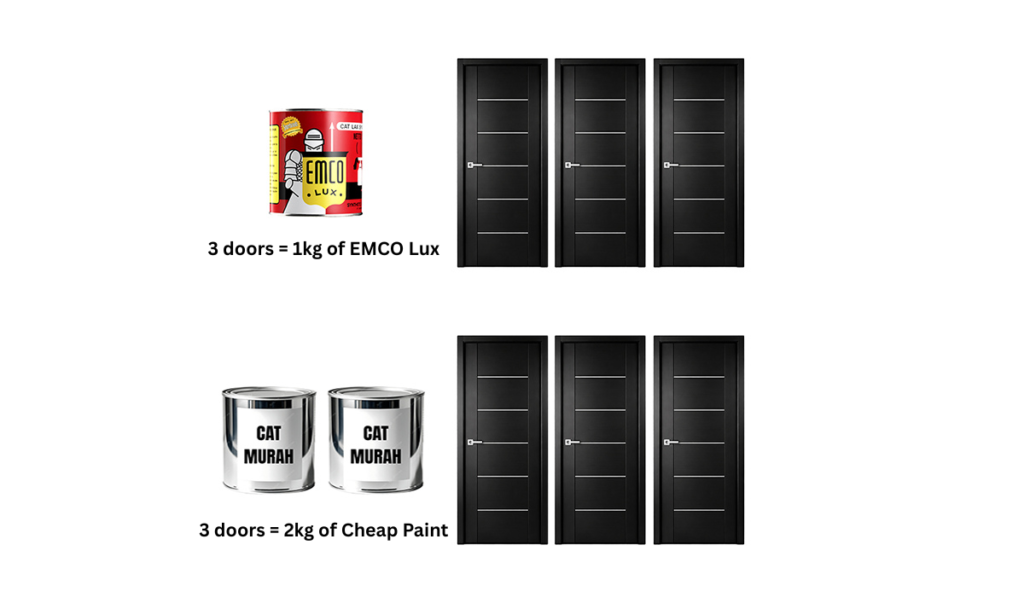
Cheap paint typically has low coverage, so painters have to apply 3 – 4 coats before the color covers the surface completely. In addition, it has low spread ability, so painting the same surface area requires buying more cans than with EMCO. This means: More Labor + More Cans.
Tips from a Senior Contractor:
“Use a paint with high coverage and true spread, such as EMCO LUX. On a per-square-meter basis, premium-quality paint is actually more cost-effective because it covers surfaces faster and covers a larger area. You’ll save on the number of cans needed and on the painter’s labor time.”
2. The “Smart Primary” Strategy
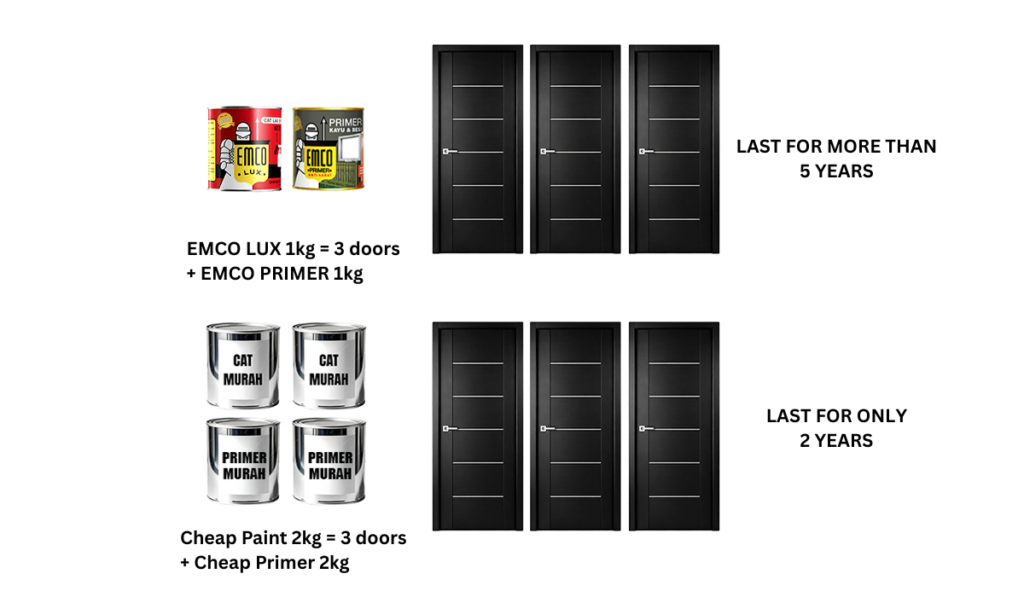
New painters may not be used to using primer. But experienced foremen know that primer is key. With primer, wood surfaces become smoother, and metal surfaces become more resistant to rust. The topcoat will adhere much better to wood and metal that have been primed first. As a result, the paint color will last five years or even longer!
Tips from a Senior Foreman:
“Don’t skip the primer! Apply the primer thoroughly and evenly. The result is guaranteed to be smooth and long-lasting. That’s because the paint adheres better to wood and sticks smoothly to metal when you use a primer. If you don’t use a primer, the color will fade quickly, and it’ll just end up being a hassle. You’ll have to keep repainting it over and over.”
3. The “Smart Thinner” Strategy
Often, projects fail not because of the paint itself, but because of how it’s mixed. Thinners come in different grades, some are poor quality, others are high quality. Using bulk thinner just because it’s a thousand or two thousand rupiah cheaper is a fatal mistake. Cheap thinner prevents the paint from dissolving completely, making it harder to apply evenly and causing it to dry more slowly. Paint treated with low-quality thinner also ends up looking dull and cracks more quickly.
Tips from a Senior Handyman:
“Painting is like dating. If you don’t have the right partner (thinner), it won’t last. Use EMCO Thinner B to make it last for years.”
PRIMER FIRST, THEN LUX, AND DON’T FORGET THE THINNER!
If you’re a contractor, architect, or interior designer, make sure your project team applies EMCO PRIMER first, followed by EMCO LUX, and don’t forget to use EMCO THINNER B. This combination ensures the finished result matches the design concept and is long-lasting.
Tips for Housewives:
“I choose an architect whose final work is well-executed not just someone whose 3D renders look good. During our budget discussions, my husband always insists on using a combination of EMCO PRIMER, EMCO LUX, and EMCO THINNER for the fence paint. It might seem more expensive at first, but do the math… in the end, it’s always cheaper because it lasts up to five years or even longer. So, you don’t have to go through the hassle of repainting over and over again.”